
Leapin’ & Twirlin’: The Real Secret to Peak Performance.
Confession time:
I keep re-watching figure skater Alysa Liu's gold medal-winning performance (see below) from the Olympics and getting choked up with tears.
Why?
Because it's a display of pure joy.
She's having so much dang FUN.
-And in a time when the world feels heavy, and I've been writing a lot about anger (even good, healthy, motivating anger)…
…Watching someone who is just alive with delight, while hitting her peak potential, makes me reach for the nearest hankie.
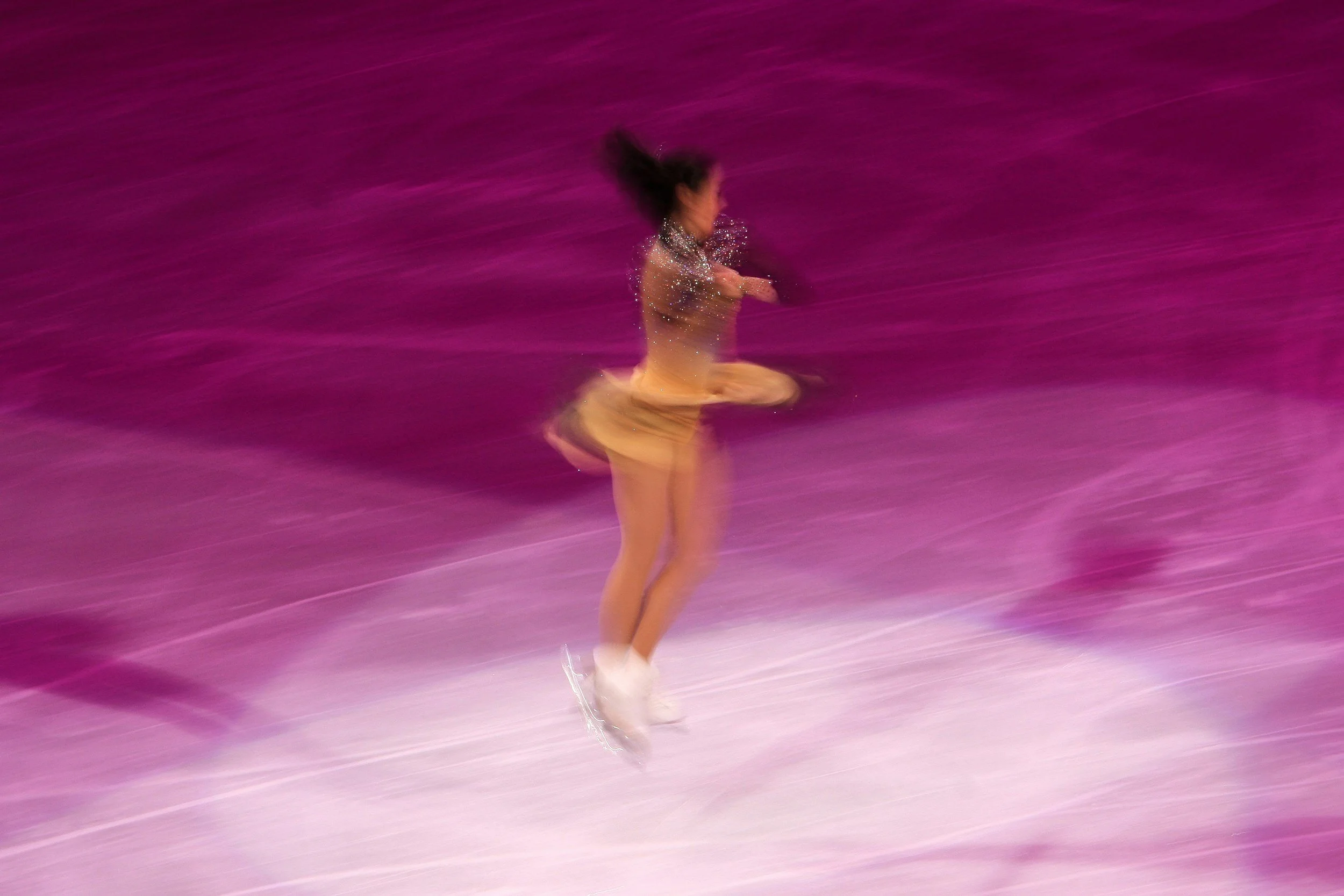
I mean it when I say she's having fun:
Alysa actually quit skating after the last Olympics, because having every hour of every day (and every morsel of food) micromanaged for her left her fried.
The constant pressure to WIN was stealing her childhood and her joy.
She took a few years off to just be a teenager. Along the way, she rediscovered her sense of play.
She returned to skating knowing that success was a huge long-shot after so much time away, but she no longer cared.
She returned on her terms:
*No one controlling her time.
*No one telling her what to eat (or not eat).
*She would choose her music (like the bangin' Donna Summer disco anthem for the Olympics).
*She'd do her hair the way she wanted it (stripes!). And most of all:
*It had to be fun. It was no longer about winning, just enjoying doing what she loves. It had to be play.
And here's the kicker:
It was the this detachment from winning that led to her win.
Before her olympic skate, Alysa said,
“I don't need a medal, I just need to be here and show people what I can do… it's a way to display my art.”
Because she was so relaxed, she was able to get more height in her jumps, and she had more flow in her movements… leading to winning the gold medal.
It brought to mind the short-but-phenomenal book The Inner Game of Tennis. (Spoiler: it's not really about tennis).
In the book, W. Timothy Gallway points out how overthinking one's backhand, for instance, leads to constricting muscles while trying to “get it right”… leading to an ineffective backhand. The overthinking is the problem.
Nonjudgmental observation, curiosity, childlike playfulness, and being present in the moment actually lead to better performance.
And what should we focus on in the moment of performance?
Gallway writes, “The difference between being concerned about winning and being concerned about making the effort to win may seem subtle, but there's a big difference.” He explains further:
“When one is emotionally attached to results he can't control, he tends to become anxious and then try too hard. But one can control the effort he puts into winning. One can always do the best he can at any moment… the energy which would otherwise gone into the anxiety and its consequences can then be utilized in one's effort to win the point.”
In short: detach from the outcome, do the best you can in the moment, and enjoy the process.
Now that's powerful. (Sparkly outfit optional).
To your fun-while-pursuing-success,
-Jane
p.s. Here’s the video of Alysa Liu’s Olympic Skate (just try not to smile and/or cry):